
Orders and peak demand
Target daily production, production shifts, peak hourly demand, and typical order batch size together form capacity input. Peak conditions correspond to main mixer cycles, receiving vehicles, and raw material supply capacity.
READY-MIX CONCRETE PLANTS / ready-mix plant
Oriented towards ready-mix concrete and ready-mixed concrete production, it is equipped with aggregate batching, powder storage, metering, mixing, discharging, and electrical control systems. Equipment selection is simultaneously checked against order structure, peak output, mixer truck turnover, and raw material supply.

READY-MIX PRODUCTION INPUTS
The equipment must not only reach the model-level capacity but also allow the storage, feeding, measurement, mixing, and vehicle receiving to form a continuous cycle.
Target daily production, production shifts, peak hourly demand, and typical order batch size together form capacity input. Peak conditions correspond to main mixer cycles, receiving vehicles, and raw material supply capacity.
The types of aggregates, powders, the amount of additives, and common formulas determine the silo grouping, metering units, and conveying configurations. Multiple formulas need to consider switching, cleaning, and production scheduling.
Aggregate replenishment, powder inventory, loader working routes, and mixer truck ingress and egress affect continuous production. The quotation stage should simultaneously provide source material, vehicle specifications, and yard road information.
A large production line can meet centralized production; when there is a need for separate line scheduling, different formula arrangements, or maintenance flexibility, a twin-line structure can be considered. Expansion plans should reserve space and utility engineering interfaces.
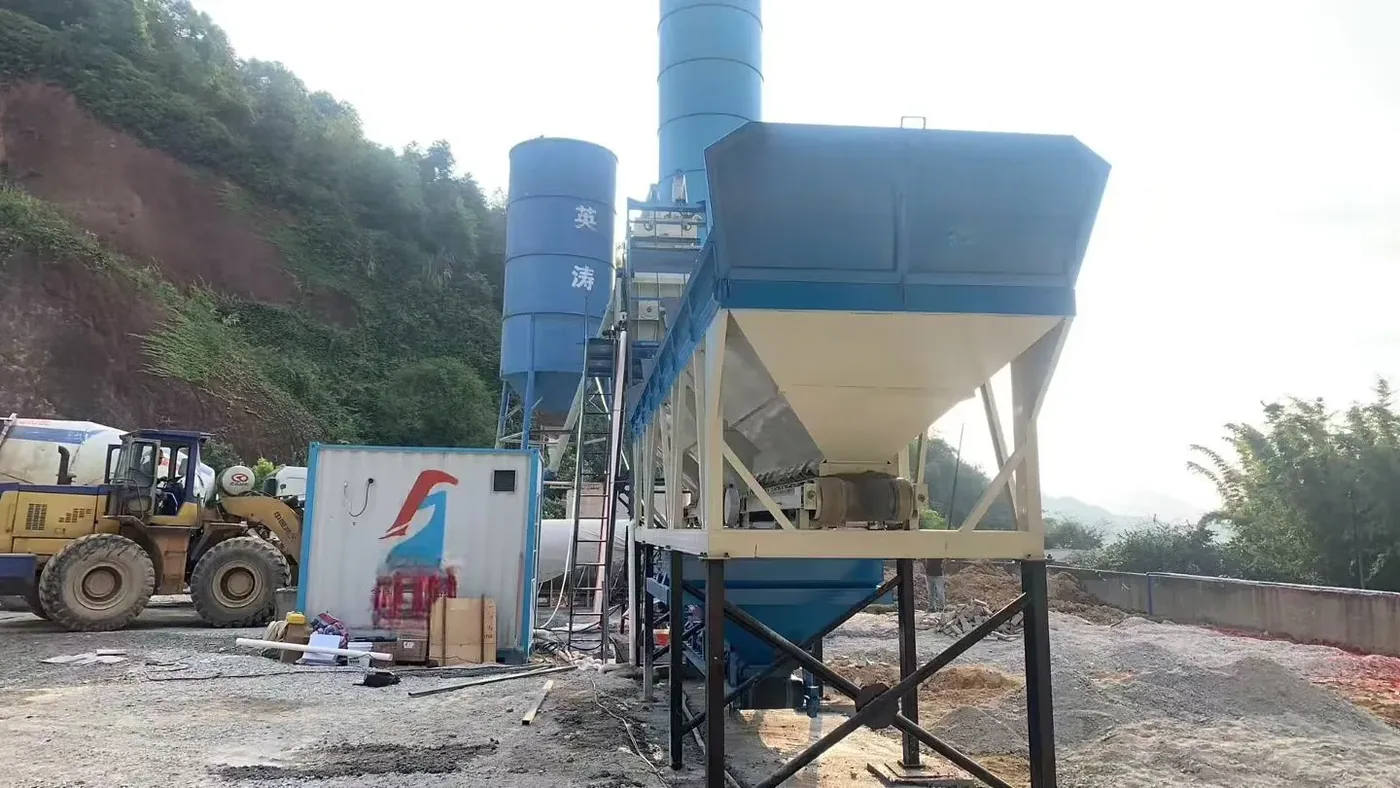
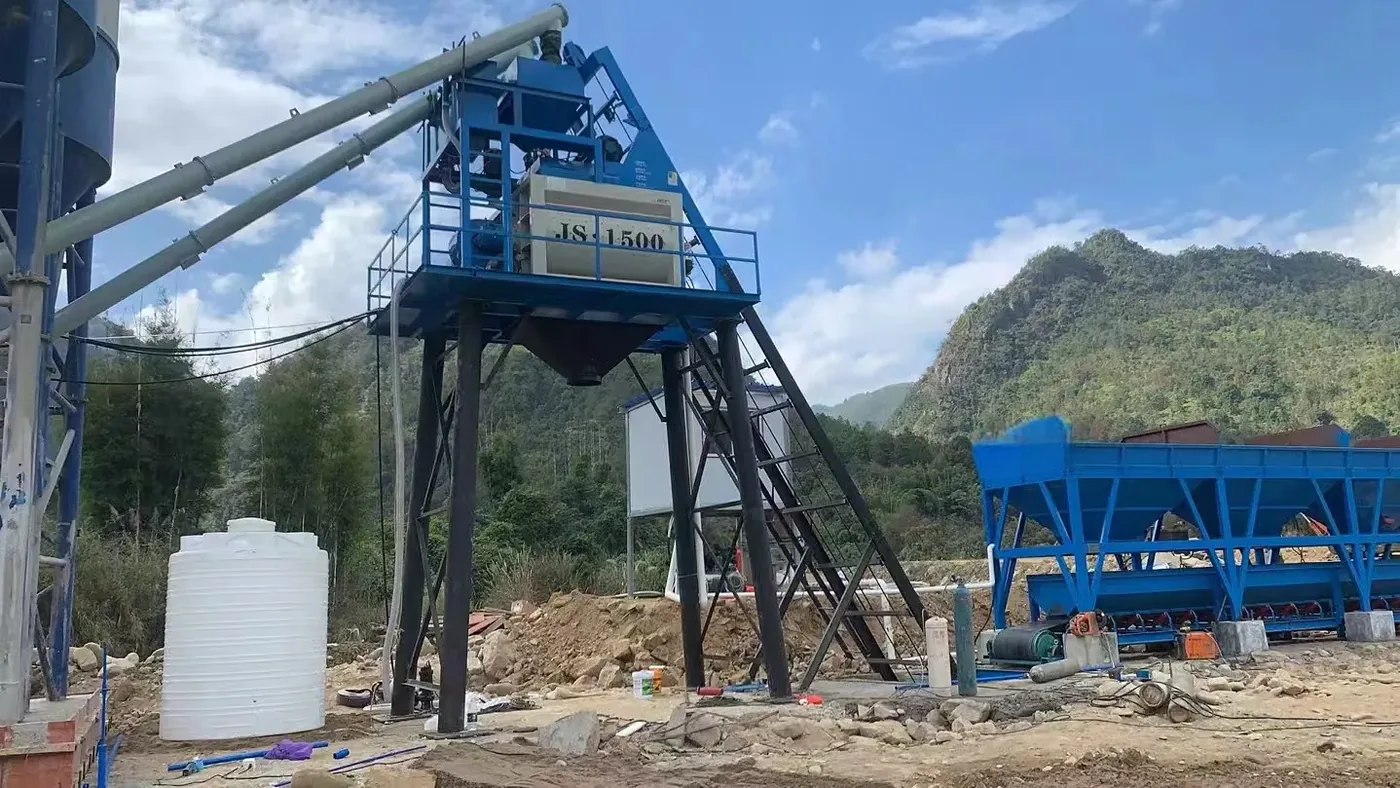
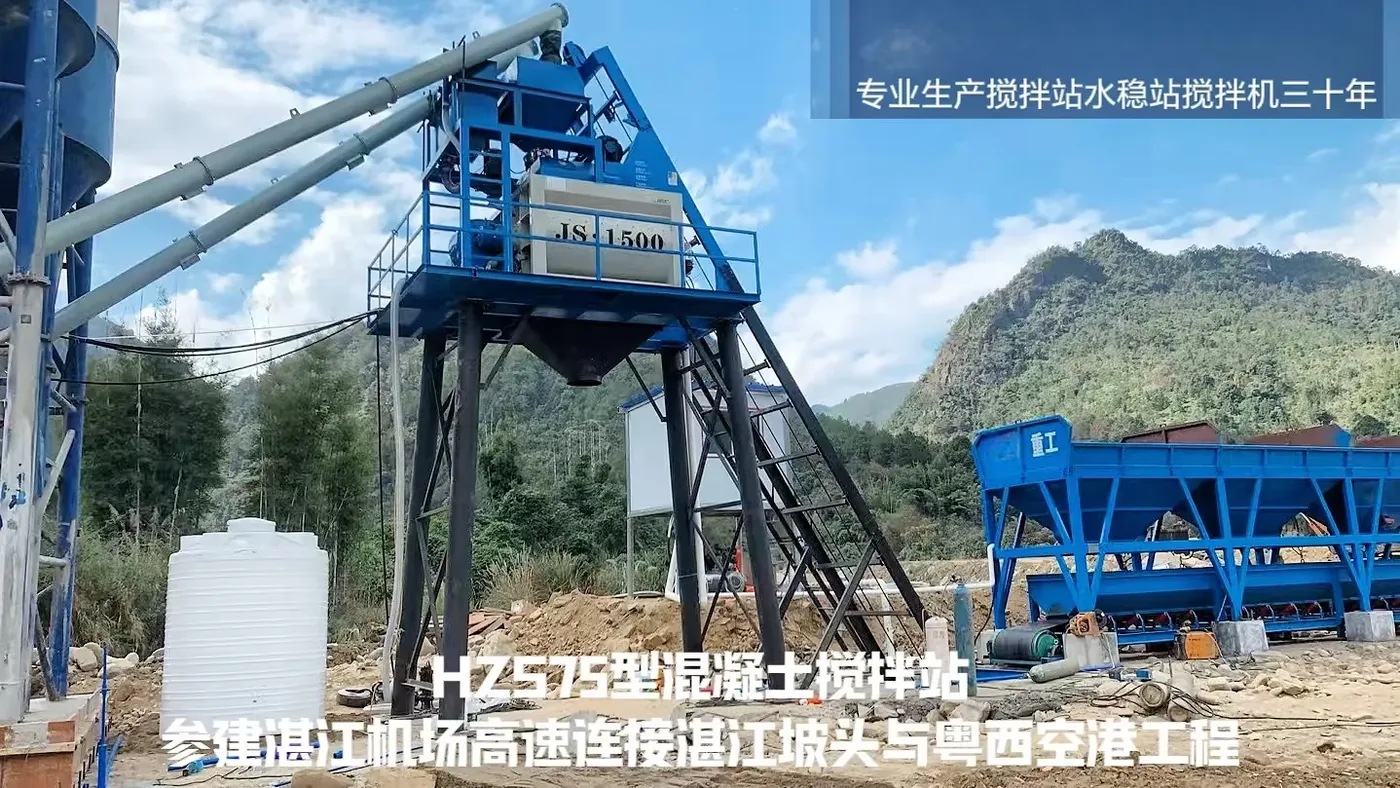
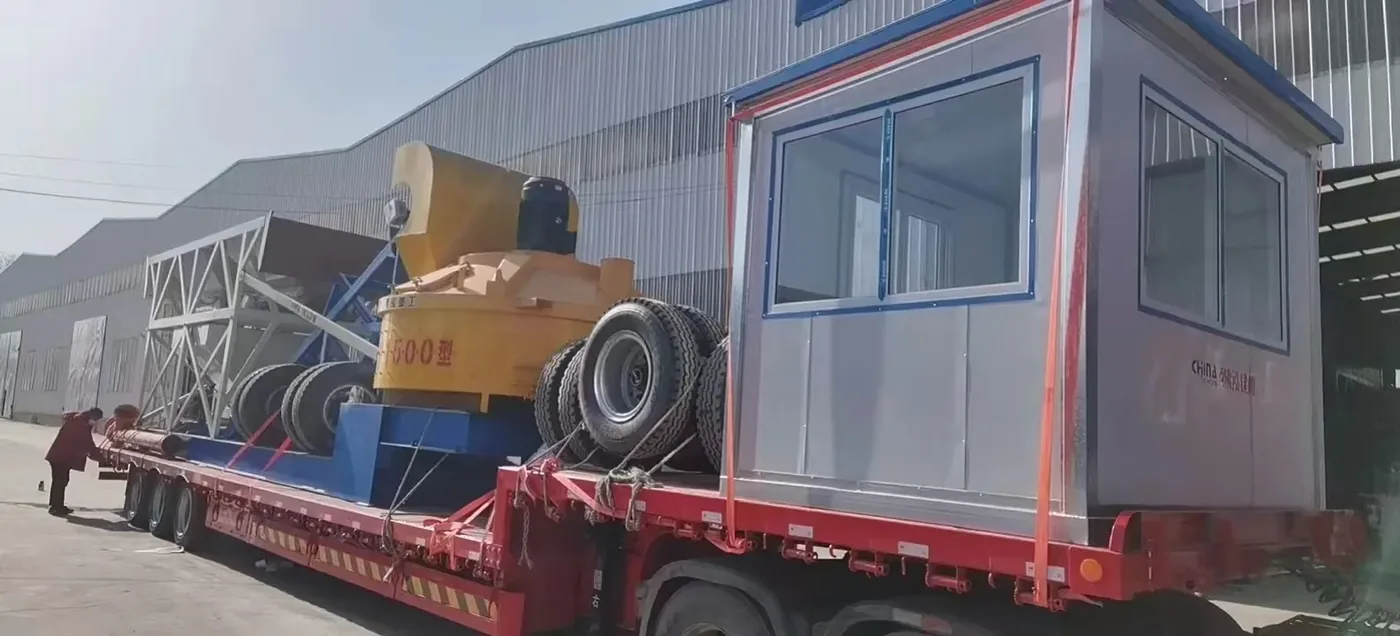
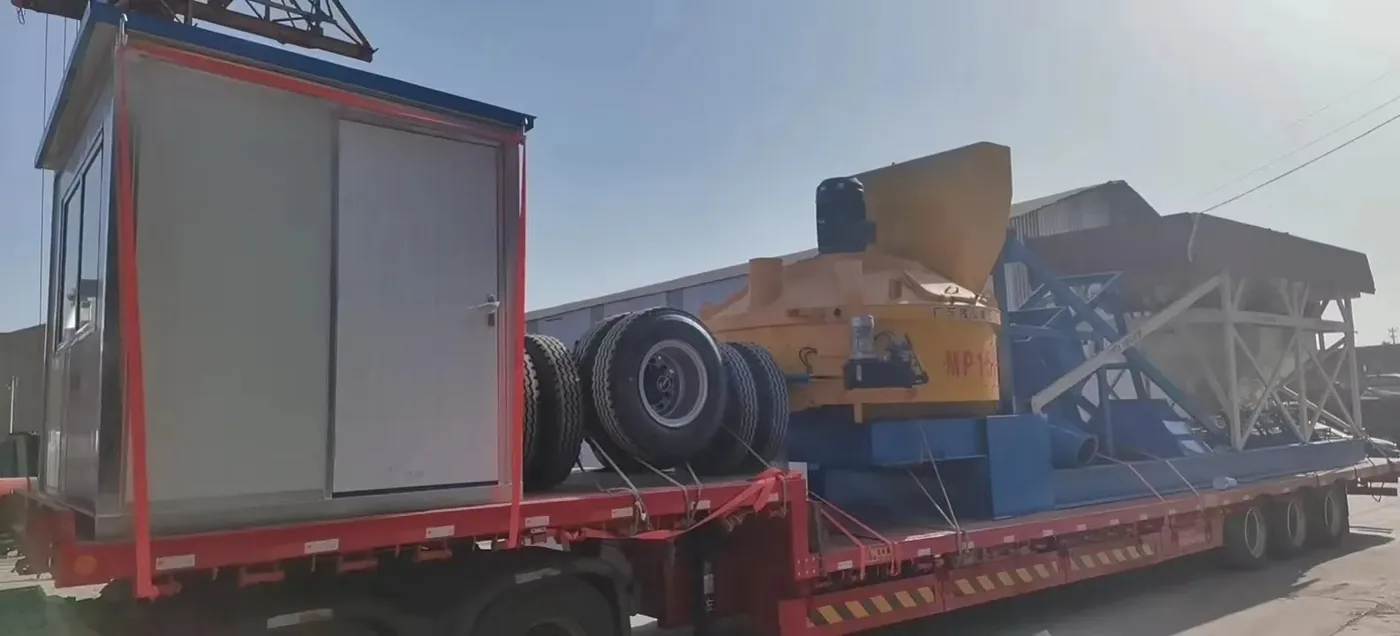
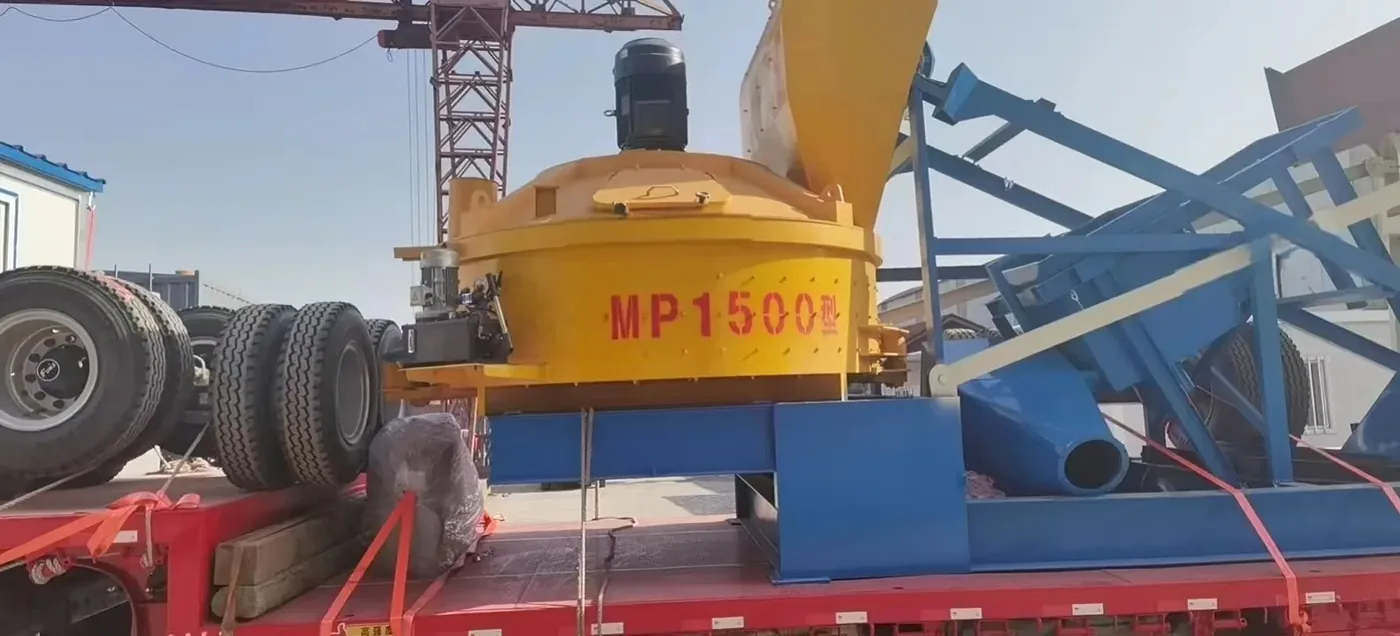
REAL EQUIPMENT / PROJECT PHOTOS
Explore equipment layouts, components and installation details. Request the specifications and supply list for the configuration you need.
EQUIPMENT SOLUTIONS
The following entries cover specific models, twin-line production, and packaging requirements; actual delivery is subject to the confirmed complete plant equipment list.
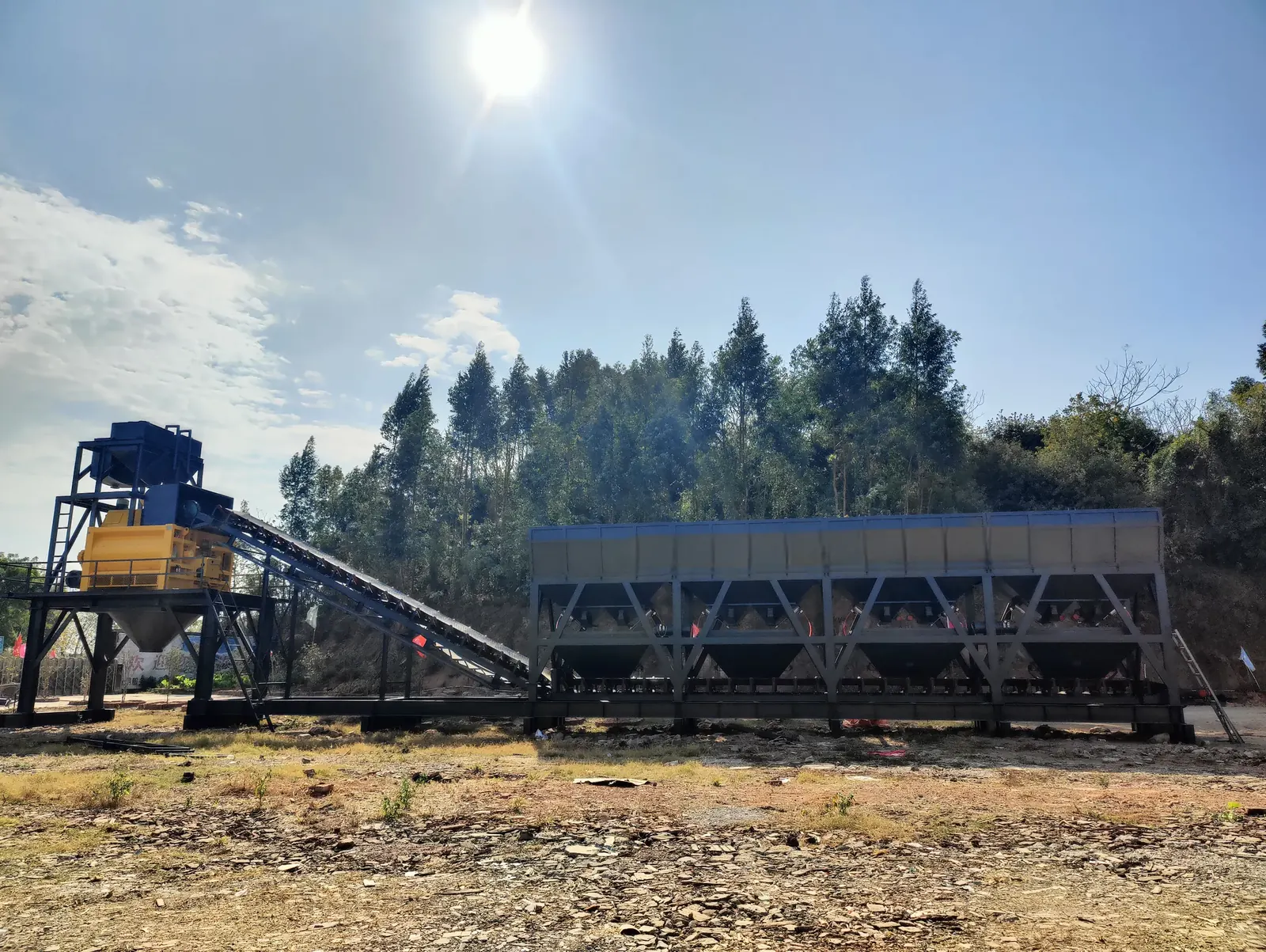
120 m³/h CLASS
Using the reference configuration of JS2000 twin-shaft main mixer, the nominal output is 2000 L per batch, main mixer mixing power 2 × 37 kW, suitable as the first round comparison model for medium to large ready-mix plant.
View HZS120 parameters ↗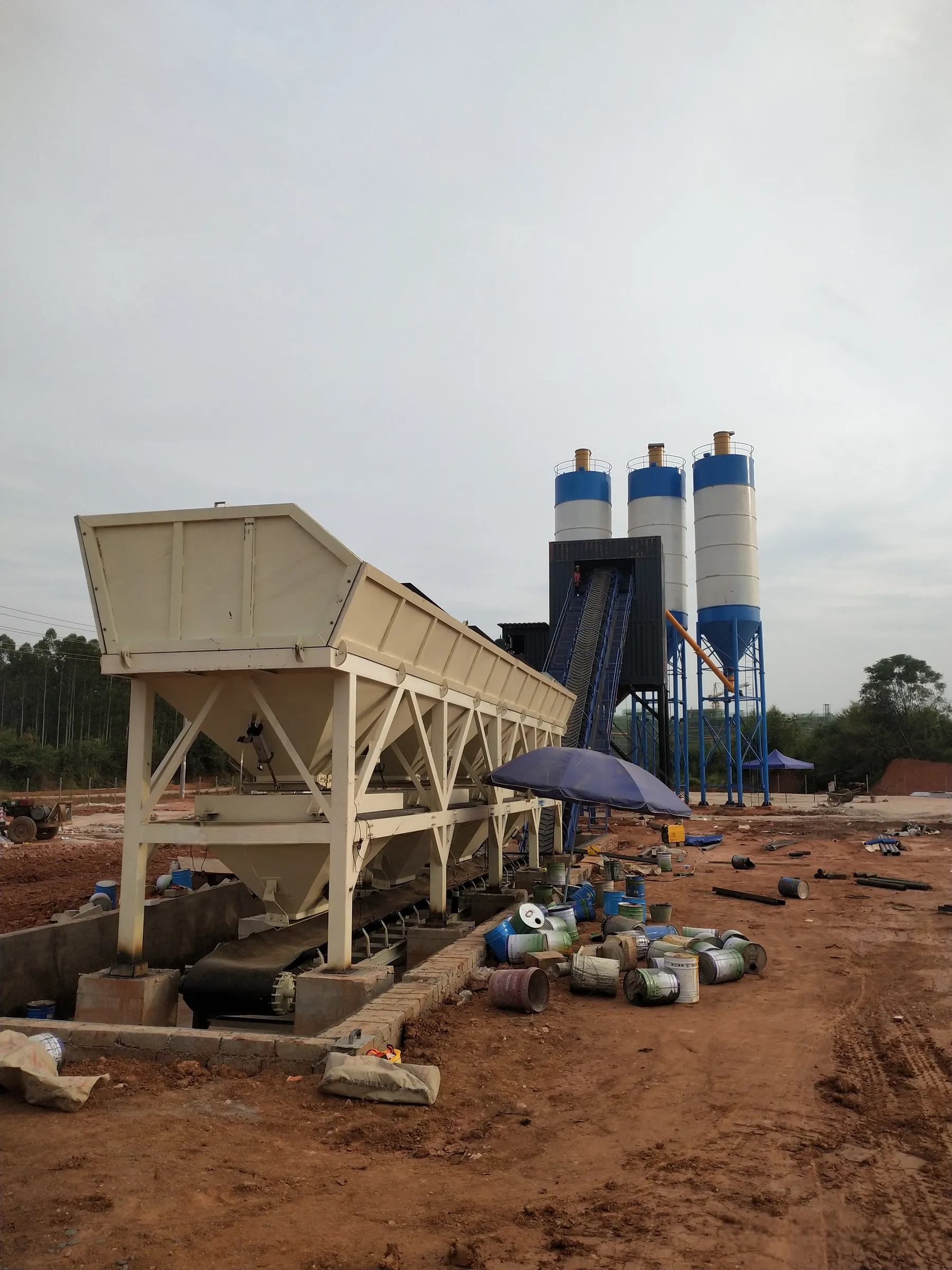
180 m³/h CLASS
Using the reference configuration of JS3000 twin-shaft main mixer, the nominal output is 3000 L / batch, main mixer mixing power 2 × 55 kW, configured with 4 sets of aggregates.
View parameters of HZS180 ↗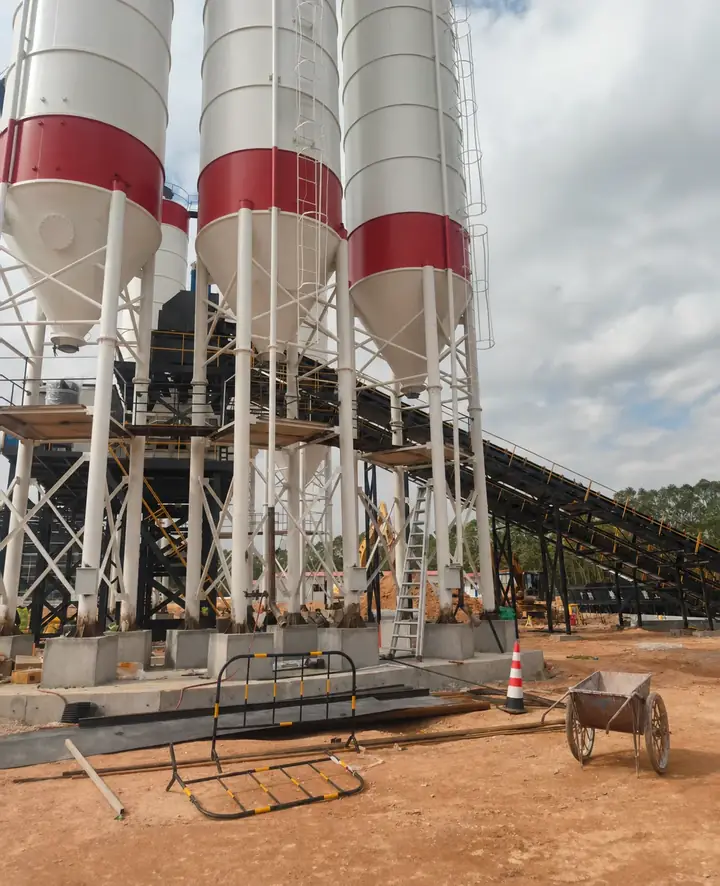
PARALLEL PRODUCTION
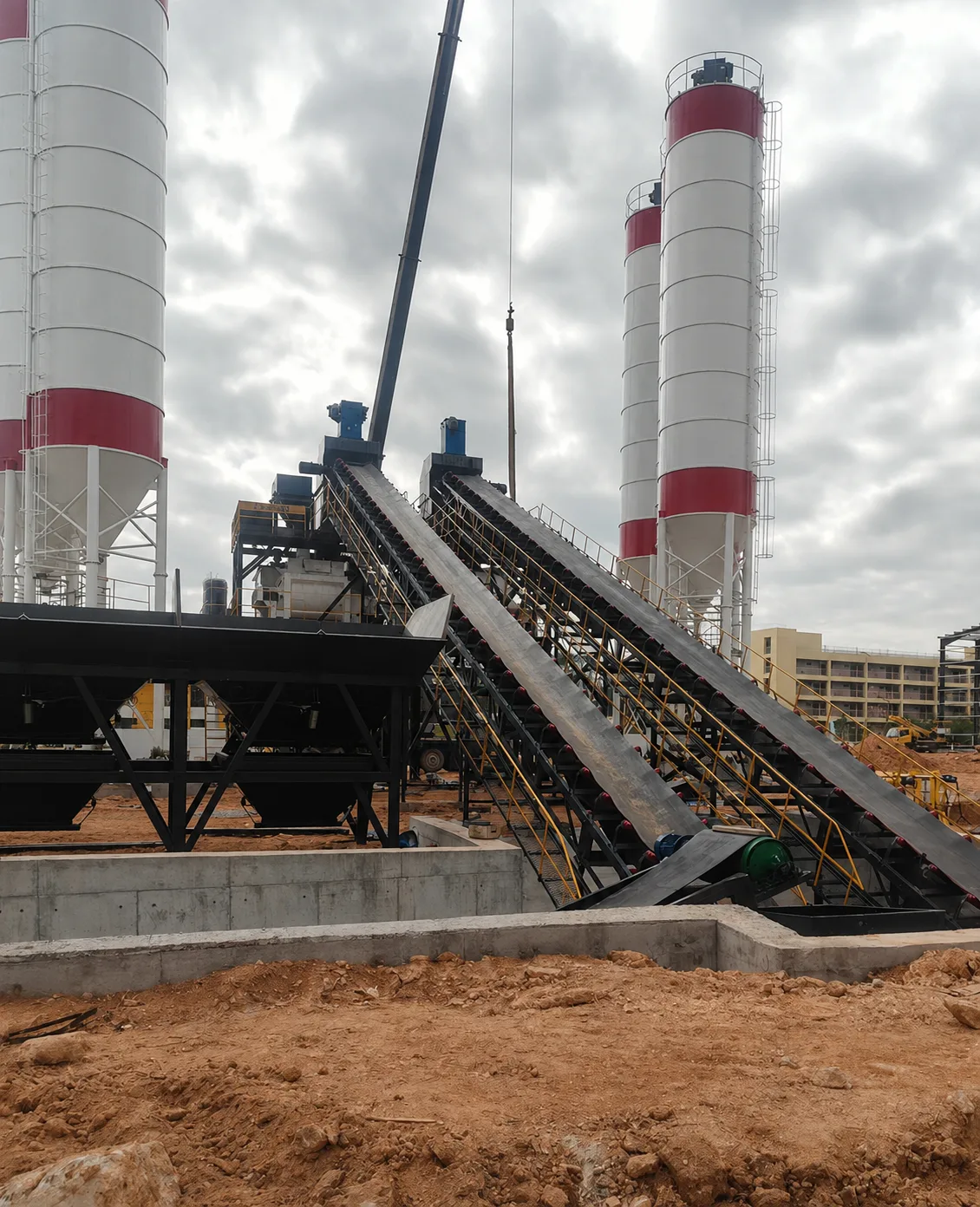
Two sets of HZS systems in parallel can organize sub-line production according to orders and formulas, and also facilitate including maintenance arrangements into the production plan. Shared and independent equipment for the two lines must be determined item by item.
View twin-line plant configuration ↗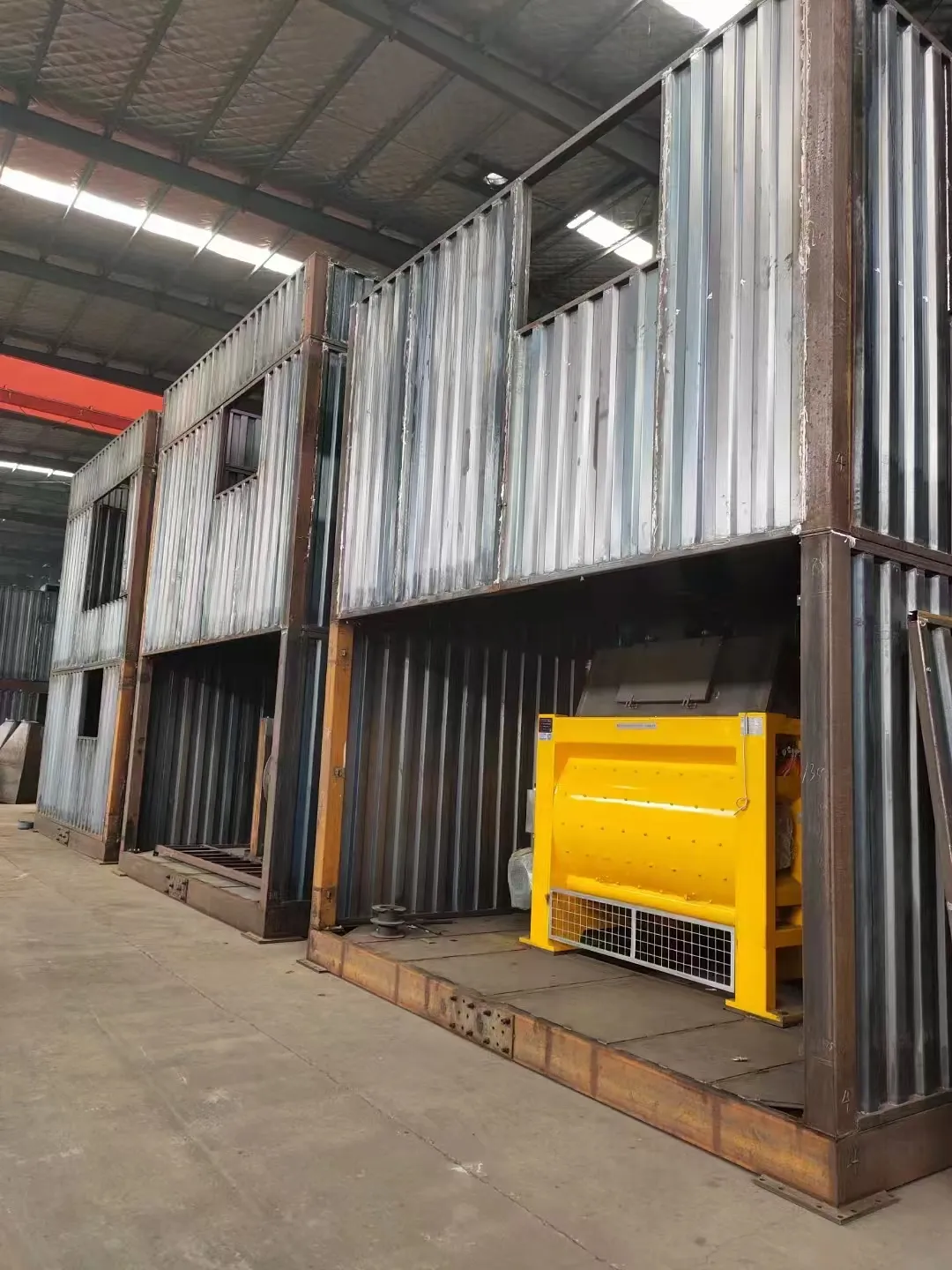
ENCLOSED MAIN BUILDING
Concentrating the mixing and metering equipment within the enclosure facilitates organizing rain protection, ventilation, dust removal, noise control, and maintenance space according to local requirements.
View Box Packaging Series ↗READY-MIX SELECTION MATRIX
Production organization and station area conditions correspond to different equipment directions; complete project data is used to determine specific configurations.
| Production Requirements | Reference Equipment | quotation Conditions | enquiry Entry |
|---|---|---|---|
| 120 m³/h level reference | HZS120 · JS2000 · 2000 L / batch | Actual formula, cycle time, vehicle material receiving and continuous raw material supply | According to HZS120 enquiry ↗ |
| 180 m³/h level reference | HZS180 · JS3000 · 3000 L / batch | Stock of 4 groups of aggregates and powders, material receiving capacity, and total electricity consumption of complete plant | According to HZS180 enquiry ↗ |
| sub-line production and maintenance arrangement | twin-line concrete batching plant | Two-line models, shared storage, independent measurement, and discharge scheduling | According to twin-line plant enquiry ↗ |
| Main building enclosure and station area management | Box-type packaging HZS series | Ventilation, dust removal, noise, maintenance, safety, and local requirements | Request an Enclosed Plant Quote ↗ |
The yield in the table is the catalog theoretical capacity, intended only for model-level comparison. The actual effective yield should be verified according to the formula, cycles, feed, and vehicle conditions.
BEFORE BUILDING THE PLANT
Residential, commercial buildings, municipal, and engineering construction create different concrete demands. Target customers, commonly used grades, order periods, and transportation radius can be converted into data on production, formulas, inventory, and vehicles, and based on this, equipment investment can be determined.
The equipment helps enterprises establish stable production capacity, and project returns also depend on orders, prices, utilization, raw material costs, and local operating conditions.
View site list for station constructionREADY-MIX FAQ
Answer procurement questions around ready-mix concrete equipment capacity, main mixer, dual lines, material storage, and the scope of quotation.
Both are needed. Daily output and shifts determine the overall task, while peak hourly demand determines the production pressure during peak periods. Mixing time, formula switching, feeding continuity, and mixer truck turnaround also need to be taken into account.
HZS120 and HZS180 respectively provide 120 m³/h and 180 m³/h catalog theoretical capacity reference. Peak orders, main mixer batch capacity, raw material reserves, vehicle material receiving, power conditions, and expansion plans together determine the applicable model.
When orders need to be organized by different production lines, arranged with different formulas, or when maintenance is intended to be included in the production schedule, the twin-line structure can be compared. The specific plan needs to confirm whether the two lines share aggregates, powders, control, and discharge systems.
Determine based on the type of raw materials, daily consumption, replenishment cycle, supply stability, and station area space. Whether cement and other powders are stored separately, whether aggregates use independent measurement, and the loading route of the loader should all be included in the layout plan.
It is recommended to provide the project's country and destination, target output, production shifts, commonly used formulas, types of aggregates and powders, site dimensions, voltage and frequency, mixer truck situation, and required service scope. Existing floor plans and equipment interface information should also be provided.
RELATED EQUIPMENT
READY-MIX PLANT QUOTATION
Send the target daily output, peak hourly demand, commonly used formulas, types of raw materials, mixer truck situation, site dimensions, voltage and frequency, and destination. Based on this, we will check HZS120, HZS180, twin-line or packaging solutions.